

Prevention
Preventing heart disease
Most heart disease is preventable. Heart Reset 40 is my book on how, with a free self-check and the key numbers worth knowing.
The book
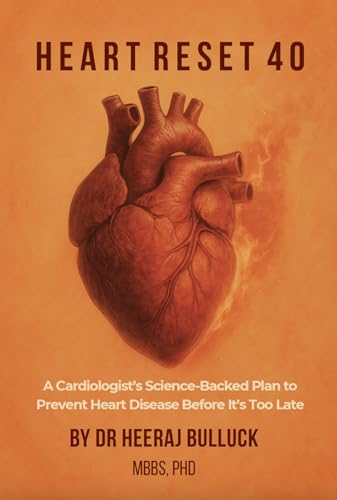
The book
Heart Reset 40
A Cardiologist's Science-Backed Plan to Prevent Heart Disease Before It's Too Late
Heart disease rarely arrives without warning. It builds quietly through everyday habits, hidden risks and numbers we overlook. Heart Reset 40 is a cardiologist-led, science-backed plan that helps busy adults understand their risk, improve the factors that matter and build heart-healthy habits that last. No fear. No extremes. Just a practical reset for more energy, greater control and a stronger future.
Reset your heart. Reset your life. Reset, not regret.
Free self-check
Heart Health Check-in
A short educational review of your lifestyle, health habits and background factors that can influence heart health. Fourteen questions, three to five minutes, with no laboratory results or measurements required. Your answers are processed in your browser and are never stored or sent anywhere.
This check-in does not calculate your cardiovascular risk and is not a diagnosis or substitute for medical advice.
Prevention starts here
Know your numbers
A handful of numbers tell you most of what you need to know about your heart health. These are general references for healthy adults, shown in UK and US units where they differ. Your own targets may differ, so use them as a starting point to discuss with your doctor.
Blood pressure
Under 120/80 mmHg
An optimal reference for many adults, not a universal target. High blood pressure is usually diagnosed from repeated readings, and your personal treatment target may differ.
Blood pressure explained →Cholesterol
LDL (the harmful one)
Under 3.0 mmol/L(about 116 mg/dL)
HDL, men
Above 1.0 mmol/L(about 39 mg/dL)
HDL, women
Above 1.2 mmol/L(about 46 mg/dL)
A general guide for healthy adults. LDL targets are lower for people with increased cardiovascular risk or established cardiovascular disease. HDL is read alongside the rest of the lipid profile, not as a target on its own.
Your cholesterol result, decoded →Blood sugar
HbA1c (average over 2 to 3 months)
Under 42 mmol/mol(6.0%)
Fasting glucose
Under 5.6 mmol/L(100 mg/dL)
General reference values for people without diabetes. In UK and Irish practice, an HbA1c of 42 to 47 mmol/mol indicates increased diabetes risk, while 48 mmol/mol (6.5%) or above is in the diabetes range. Diagnosis normally needs clinical review and, when appropriate, confirmation with repeat testing.
Waist
Below 0.5 waist-to-height ratio
Keep your waist below half your height. Measure midway between the lowest rib and the top of the hip bone. A ratio below 0.5 is the current simple guide for adults of all sexes and ethnic backgrounds.
Sleep
7 to 9 hours a night
Individual needs vary. A regular sleep and wake pattern also matters.
Exercise
150 to 300 minutes a week
Moderate activity, or 75 to 150 minutes of vigorous activity.
Include muscle-strengthening activity on at least 2 days a week. Any activity is better than none.